Daycare Settling-In: What Parents Actually Need
Starting daycare is as big a moment for parents as it is for kids. This checklist covers what really matters – and what you can safely skip.
The day is getting closer. You got the daycare spot, read the welcome brochure three times, and now know more about settling-in models than you ever wanted to. And yet, three days out, you're standing there wondering: what do we actually need?
The good news: less than you think. The not-so-good news: the little that matters really has to be sorted.
What the Daycare Tells You – and What They Don't
Every daycare hands you a list. Spare clothes (at least two sets), rain boots, sunscreen, a comfort toy from home, everything labelled. All correct, all important. But those lists only cover the material side.
What's missing: the organisation around it. Who's dropping off, and when? Who picks up if the settling-in takes longer or shorter than planned? What happens on day three when your child starts crying again and the key worker suggests extending by another week? Who takes time off then?
These questions catch families off guard – especially when parents work different schedules, or even live apart.
The Realistic Settling-In Checklist
Practical Things (That Everyone Forgets)
You know the standard list. Here's what tends to slip through:
- Cash on hand – Many nurseries still collect small fees in cash. Sounds trivial. Annoying on day one if you haven't thought of it.
- Photos for the coat peg – A photo of your child for their peg spot, sometimes a family photo for the cosy corner. Not everywhere, but often requested.
- Nappies labelled individually – Yes, every single one. Sounds absurd the first time you hear it. Makes sense once you've forgotten.
- Medication consent forms – If your child needs anything regularly: fill out the form, sign it, hand it in. Otherwise the nursery can't administer anything.
- Emergency contacts in writing – Not just in the system, but on paper too. Some nurseries still run on clipboards.
The Organisational Side (Which Nobody Puts on the List)
This is where it gets real. Settling-in means being present – every day – for the first few weeks. Or at the very least: reachable at short notice.
The Munich model requires a parent to stay for the first couple of days. Other approaches are a bit more flexible, but the principle holds: you're on call. Your child can shift into a phase that needs more support at any time.
In practical terms, that means: you need a plan covering at least four weeks, flexible enough to adjust daily. Who drops off? Who picks up? Who stays? Who's the backup when the original plan falls apart?
That sounds manageable. And it is – as long as you've written it down somewhere both parents can always see.
Why the Usual Family System Falls Short Here
WhatsApp groups work up to a point. But settling-in periods are phases where a lot happens simultaneously: work, burning through holiday days, schedule reshuffles with your employer, maybe another child in school on top of it. When a message gets buried in the thread, exactly what nobody wants happens – your child is waiting at noon and no one shows up.
A shared calendar – actually shared, not just a mirror of one person's Google Calendar – makes the difference here. Both parents see at a glance who's responsible when. Changes land directly with the other person, without anyone having to write "did you see my message?" first.
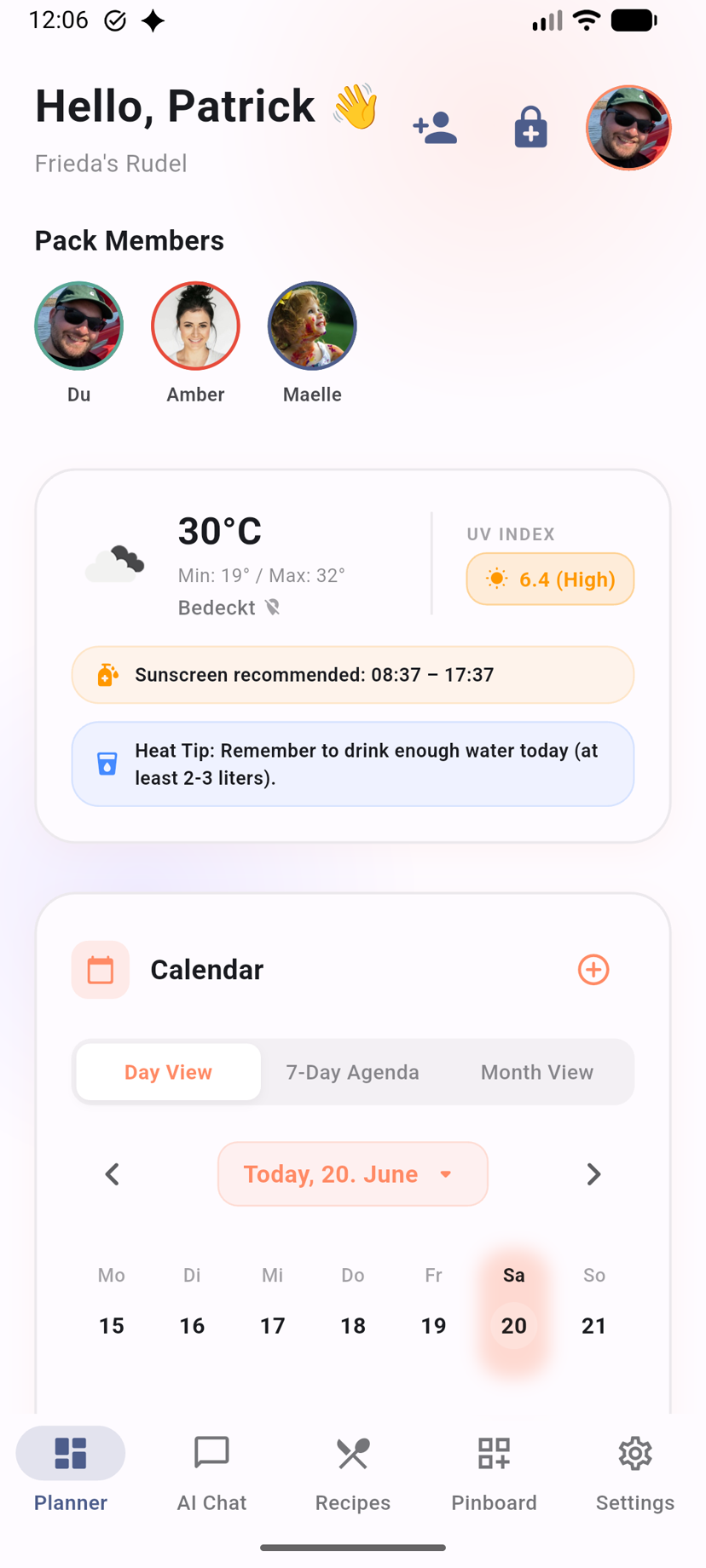
Pack Planner does exactly that: a shared family calendar both parents can access, paired with to-dos for settling-in tasks ("label nappies", "hand in nose spray form", "print photos for peg"). Unspectacular, yes. But also the difference between "sorted" and "chaos on Monday morning".
Emotional Preparation – Yes, That Too
Here's the part that surprisingly few parenting blogs mention: settling-in is emotionally hard. Not just for the child.
You're letting go of someone who needs you completely. Who has no choice. Who might cry when you leave – and that can feel like you're doing something wrong, even when you know it's right.
That's normal. It's also normal that parents handle it differently. Some feel relief when it goes smoothly. Some grieve the shift in daily life. Both are valid, and neither is more correct than the other.
What helps: talk about it before you're in the thick of it. And make a plan for who handles what – not because you have to, but because it frees up headspace for what actually matters.
What You Really Need in Week One
Concrete, no fluff:
A clear handover routine. Brief, reliable, not drawn out. Children don't need a 15-minute farewell ritual. They need a clear signal: "I'm leaving now, you're safe here, I'll be back."
Quiet afternoons. Nursery is exhausting – even if your child was only there for two hours. Don't stack the afternoon with appointments.
One communication channel between the two of you, and one that works. Not five.
The Most Common Settling-In Planning Mistakes
Being too optimistic. "Three weeks and we'll be sorted" – maybe. Maybe not. Plan for four to six weeks, and if it goes faster: great.
Nominating only one person as responsible. Settling-in is teamwork. If only one parent is "in charge" and then gets ill, you have a problem.
Underestimating nursery communication. Key workers often have observations after day one. Ask actively. Write down what they say – you won't remember it by evening.
Forgetting that older siblings react too. A toddler starts nursery, the older child suddenly gets less attention during the settling-in phase. That needs planning as well.
After Settling-In: The New Normal
Once settling-in is done, a new phase begins: the regular nursery routine. Pick-up times, closure days, parents' evenings, trips, special days. All of this now arrives as information on a regular basis – sometimes as a note in your child's bag, sometimes as a notice you spot by chance on the wall.
A system that captures this information reliably is worth its weight here. Letter arrives in the bag? Add the date to the shared calendar right away – it takes half a minute – and turn anything you need to bring or pay into a chore with a due date. If your nursery publishes its closure days as a calendar link, subscribe to it once in Pack Planner and they appear by themselves.
It's not glamorous. But once everyone sees the same dates, nobody has to be the one who remembers.
A Quick Note for the First Day
You'll manage. Most families do, even when it doesn't feel that way at first. What makes the difference isn't the perfect comfort toy or the right labelling method – it's whether you function as a team. Whether you know who does what and when. Whether you can coordinate without it costing you an argument.
Good organisation during settling-in isn't bureaucracy. It's care – for your child, for each other, and for your own calm on a morning that's already charged enough without adding confusion.
Pack Planner helps families organise nursery life together – with a shared calendar, chores with reminders and calendar subscriptions for nursery dates. Start for free at pack-planner.io – or download directly from the App Store or Google Play.
Try Pack Planner for free
No credit card, no commitment. Download and see if it fits.